The prompt for my second project for Intaglio printing class is simply "Architecture, cityscape and the urban environment" and it needs to include at least one line technique (drypoint, engraving, etching) and at least one tone technique (aquatint, photo-etch, sugarlift, whiteground) to produce an edition of 7 consistent prints and 3 "states" or proofs that are all different. We've had demos on most of the techniques involved except photo-etching, which is of course the one I want to focus on.
Conceptually I started thinking about what is interesting to me about "architecture, cityscape and the urban environment" (which are things I thought about a lot during my "Metacities" project last year) and more so than the physical forms of the architecture of the city, it is always the experience - what it means to be in those spaces, the way the individual exists and interacts within and shapes the city/environment, that presents interest to me. The choice people make to live in certain cities or just a city in general, the choices they make in collectively shaping the city socially and physically, what is it that draws us to certain places, that we think we can get in one place and possibly not somewhere else?


I thought about living in London, the bipolarity of modern architecture and a new culture growing symbiotically out of a city far older than colonized North America, the experience of constant, everyday reminders of newness and novelty and change dichotomized alongside the permanence of fixed history and tradition. The opportunities available there included access to some of the "best" museums and galleries in the world, venues that house not only important historical work but present the newest big shows and exhibitions, it's a stop for every touring musician and band, it felt like a place of exposure, where artists, musicians and designers can potentially receive very real attention and establish themselves - cities are referred to as "centers" of art and culture, the separate but connected locales of a world stage, nodal points where these things are cultivated.

There is a desire tied to the idealized City that promises the individual the forefront of progress, witness at the event horizon of novelty and change where more new options are available, and I remembered William Gibson describing cities as "vast, multilayered engines of choice":
"I walked through my hometown, imagining it a city. What I was
imagining, I now see, was an increase not in size but in number of
choices. Cities afforded more choices than small towns, and constantly, by
increasing the number and randomization of potential human and cultural
contacts. Cities were vast, multilayered engines of choice, peopled
primarily with strangers. You never know whom you might meet in the city. In a small town,
you’re less likely to encounter people or things or situations you
haven’t encountered previously.
As a boy, I took myself away to cities as quickly as I could and
have lived in them ever since. When I travel now, I travel mainly to
cities, and I travel to return to those I know, taking a deepening
pleasure in the serial experience. The idea of visiting a fascinating
city only once saddens me, and I seldom have a city I've come to know
without wondering if I'll see it again. But in our ageographical
existence, I am never entirely not in London, entirely not in Tokyo.
The Internet,
which I think of as a sort of meta-city, has made it possible for
people who don't live in cities to master areas of expertise that
previously required residence in a city, but I think it's still a faith
in concentrated choice that drives migration to cities." -William Gibson

The "ageographical", virtual existence established by technology like the Internet is something I have grown up with, it is taken for granted that from anywhere with wifi I have a form of access to data representing happenings in all other places. Gibson dreamed of the vast array of opportunity offered by existence in a city (as people still do) but there is now a form of equalization facilitated by the information age through the mass dissemination of "culture" or spectacle and geographical location is no longer the prime determinant of what we are exposed to (albeit exposure on a 2D screen is something completely different from "lived experience" but I won't get into that). The migration to cities is not obviated by the connective digital landscape but supplemented; services like Google Maps and social networking and mobile devices overlay a user-controlled experience onto the cityscape, we're probably all familiar with finding out about things and where to go in the real city online - "word of mouth" is still fundamental but the "mouth" is more and more a virtual one.


I also grew up with an idea that was seeded into the collective unconscious largely by Gibson: an immersive virtual reality that seemed only just around the corner in the 80s and 90s. If the city is a vast engine of choice then the virtual city is an infinite one. It was only a matter of time, given the exponential technological advance, before we would all be strapping on headsets and literally plugging in to a fully sensory experience of a virtual world that would drown out consensus reality completely. I don't know what anyone reading Neuromancer in 1984 imagined 2012 would have been like but we're still mostly staring at flat planes, struggling to keep building our physical cities, nevermind constructing the new urban landscapes out of photons and data, no one has uploaded their consciousness to the Internet and properly abandoned the world of the flesh as far as I know, and experiments like Second Life are pretty much the most we have to show of the embarrassing state of the virtual worlds initiative. Still, I feel like the trajectory is still there, even if technology isn't, and beyond our experience in the real city, many of us seek the advancement toward the collective, ageographical, user-developed digital architecture of utopian cyberspace.


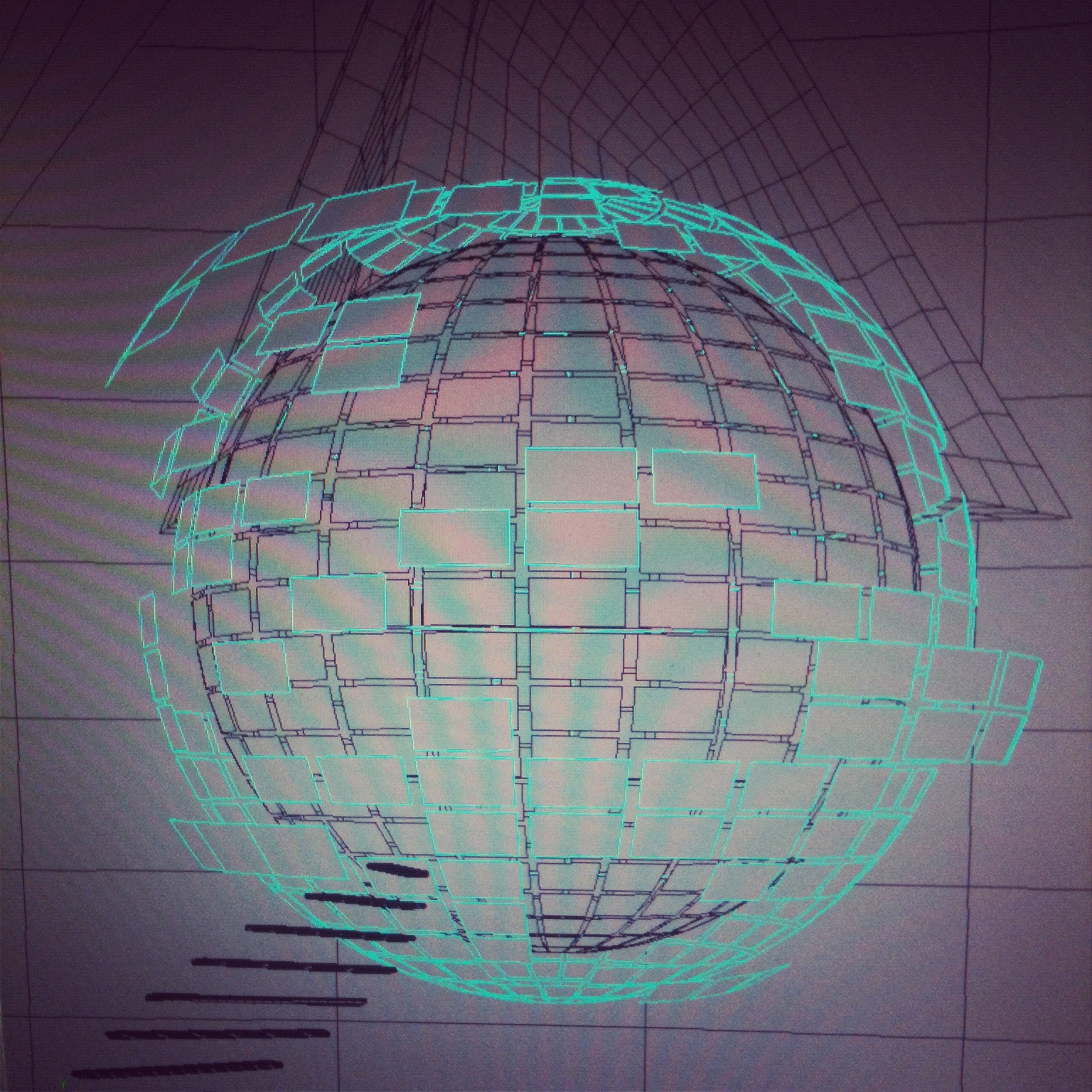
With this project I want to imagine what could have been or what could still eventually be, a sort of homage to the halted dream of the new urban landscape, which is a modular virtual one we can influence at will and control at the true rate of novelty. The creation or visualization of "spaces", whether they are architectural or city-like or not is a constant in human creative ideation and is a fundamental meditative healing act in many traditions - I see a lot of similar psychological inclinations linking projection of virtual worlds and
Mahayana purelands. As the pursuit of experience of spaces which offer us what we want continues into this kind of territory, it becomes less about the physical structure and materiality of the city's presence and more about the effects we wish to evoke, functionality will take a back seat to the activation of numinous symbols and the human psyche will become the true foundation upon which the post-urban environment is built.


.JPG)

.JPG)
.JPG)


.JPG)
.JPG)
.JPG)
.JPG)
.JPG)




 There is a desire tied to the idealized City that promises the individual the forefront of progress, witness at the event horizon of novelty and change where more new options are available, and I remembered William Gibson describing cities as "vast, multilayered engines of choice":


.JPG)
.JPG)
.JPG)


