Finally got the shot I was looking for. Phosphorescent ink on white cotton, UV lighting.
Wednesday, March 28, 2012
Tuesday, March 27, 2012
Saturday, March 24, 2012
Futher Print Designs
Another print pattern made from a line drawing, mirrored and flipped to become a tiling pattern, rescaled, printed on translucent acetate and onto grey cotton.
Friday, March 23, 2012
Draping
Draping, draping, draping, drawing, drawing, drawing. This is one of the most difficult and time consuming parts of the process for me, because I have no real background or developed understanding of garment construction, lots of trial and error and mixed results but I'm learning.
Thursday, March 22, 2012
Urban Tribes, Subcultures and Neo-Tribalism
As early as 1950, sociologist David Riesman distinguished between a majority, "which passively accepted commercially provided styles and meanings, and a 'subculture' which actively sought a minority style ... and interpreted it in accordance with subversive values.
In considering the "wearer" for my designs placed in the concept of the speculative metacity, my project has turned toward urban tribes and subcultures. Examples of urban tribes are the punk movement that has persisted since the 70s, art collectives, various music and clubbing scenes, gangs, essentially even religious groups. When I design, I always feel like I'm picturing a certain group that may or may not yet exist, and depicting them and how they look. A defining principle of an urban tribe is that they seek forms of expression which are not ubiquitous within the dominant culture, visual self representation/differentiation (fashion) is very important in establishing group or individual identity, especially for those who intend to position themselves in a sense outside the broader society. Aesthetic codes and identity symbols are fundamental to fashion, self expression and human society itself.
These kinds of groups are inextricably linked to fashion and other creative communities; punk continues to be the most obvious "tribal" example but however countercultural, the community nature of music-based and other subcultures facilitates an inspiration/contributory relationship with fashion, art and other forms of expression.
In all ape species there is a tribal number, a manageable limit of organization and interaction; within civilisations we necessarily form groups of hopefully like-minded people. Sociologists have described 4 or 5 "groups of organization" that form within society, in “In Search of How Societies Work - Tribes: The First and Forever Form”, a 2006 paper by David Ronfeldt, these are described as tribes, hierarchical institutions, markets and networks. In the present, the Information Age, I feel that the term "networks" has taken on a different meaning, potentially global but potentially small communities: digital tribes.
Neo-Tribalism is a modern sociological phenomenon that has developed in response to civilization, or the modern corporation/state society, wherein smaller social groupings of like-minded or themed communities are formed. The most casual form of Neo-Tribalism is the urban tribe, a term first coined in 1985 by French sociologist Michel Maffesoli in Le temps des tribus: le déclin de l'individualisme dans les sociétés postmodernes. According to Maffesoli, urban tribes are microgroups of people who share common interests in metropolitan areas. The members of these relatively small groups tend to have similar worldviews, dress styles and behavioral patterns. Their social interactions are largely informal and emotionally-laden, which stands in sharp contrast to the formalized Machiavellian constructs of corporate culture. The term was expanded upon by author Ethan Watters in Urban Tribes: A Generation Redefines Friendship, Family, and Commitment as “an intricate community of young people who live and work together in various combinations, form regular rituals, and provide the support of an extended family.”
In considering the "wearer" for my designs placed in the concept of the speculative metacity, my project has turned toward urban tribes and subcultures. Examples of urban tribes are the punk movement that has persisted since the 70s, art collectives, various music and clubbing scenes, gangs, essentially even religious groups. When I design, I always feel like I'm picturing a certain group that may or may not yet exist, and depicting them and how they look. A defining principle of an urban tribe is that they seek forms of expression which are not ubiquitous within the dominant culture, visual self representation/differentiation (fashion) is very important in establishing group or individual identity, especially for those who intend to position themselves in a sense outside the broader society. Aesthetic codes and identity symbols are fundamental to fashion, self expression and human society itself.
These kinds of groups are inextricably linked to fashion and other creative communities; punk continues to be the most obvious "tribal" example but however countercultural, the community nature of music-based and other subcultures facilitates an inspiration/contributory relationship with fashion, art and other forms of expression.
Punks in the 70s/80s
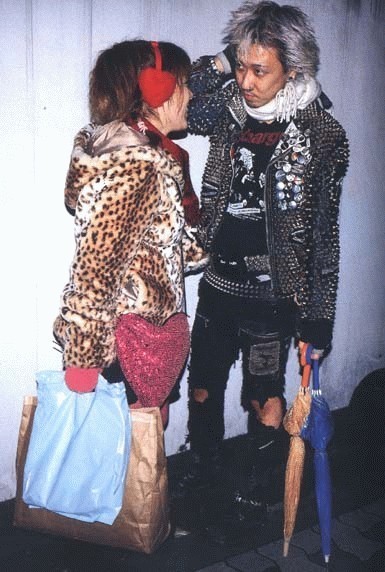
Kawakami from d-beat band Disclose and friend (early 2000s), d-beat is a very specific genre of music yet an entire subculture has formed around it, most popular in Japan and Scandinavia but known around the world
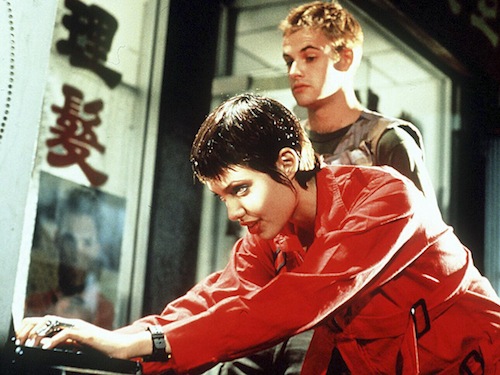
Angelina Jolie and Johnny Lee Miller in Hackers (1995), depictions of urban tribes in fiction have the potential to inform their real life equivalents
Bosozoku, a kind of motorbike/vehicle subculture, commonly dressed in long overcoats covered with painted slogans, wearing boots, baggy jumpsuits, surgical masks and badges.
In all ape species there is a tribal number, a manageable limit of organization and interaction; within civilisations we necessarily form groups of hopefully like-minded people. Sociologists have described 4 or 5 "groups of organization" that form within society, in “In Search of How Societies Work - Tribes: The First and Forever Form”, a 2006 paper by David Ronfeldt, these are described as tribes, hierarchical institutions, markets and networks. In the present, the Information Age, I feel that the term "networks" has taken on a different meaning, potentially global but potentially small communities: digital tribes.
Neo-Tribalism is a modern sociological phenomenon that has developed in response to civilization, or the modern corporation/state society, wherein smaller social groupings of like-minded or themed communities are formed. The most casual form of Neo-Tribalism is the urban tribe, a term first coined in 1985 by French sociologist Michel Maffesoli in Le temps des tribus: le déclin de l'individualisme dans les sociétés postmodernes. According to Maffesoli, urban tribes are microgroups of people who share common interests in metropolitan areas. The members of these relatively small groups tend to have similar worldviews, dress styles and behavioral patterns. Their social interactions are largely informal and emotionally-laden, which stands in sharp contrast to the formalized Machiavellian constructs of corporate culture. The term was expanded upon by author Ethan Watters in Urban Tribes: A Generation Redefines Friendship, Family, and Commitment as “an intricate community of young people who live and work together in various combinations, form regular rituals, and provide the support of an extended family.”
Wednesday, March 21, 2012
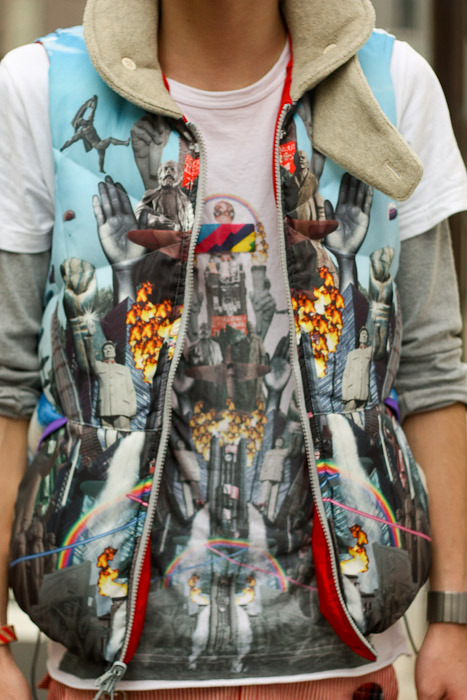
Having a hard time deciding if I love or hate the current state of digital print, it's so easy and relatively affordable to put any imagine on fabric now it seems like cheating and the quality of the prints can be so low res and badly compressed JPEG looking but...
this Manish Arora stuff looks so great to me, some people can use the technology so well. In the future we'll probably just wear screens that display constantly shifting, perfect resolution images of whatever we like on them and be walking screensavers.
Tuesday, March 20, 2012
Screenprinting
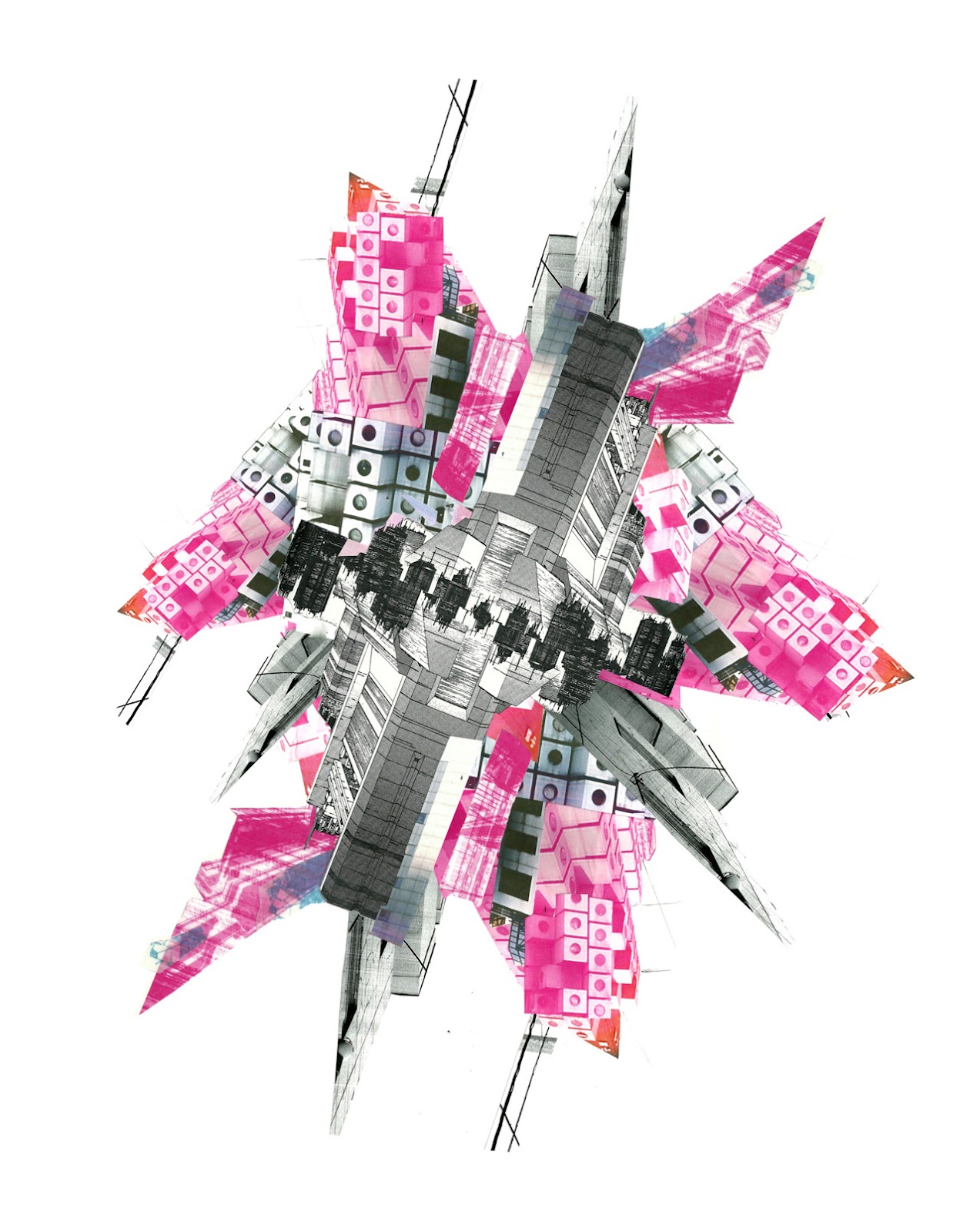
A fairly messy and tedious process but I made this digital collage/print motif...
into this screen...
and made these prints...
which glow in the dark!
Subscribe to:
Posts (Atom)